Rules and one worked grid
How to play Murdle
A Murdle has two stages: establish who has which weapon where, then use the crime clue to identify the murderer. The original example below demonstrates the association stage without copying an official case.
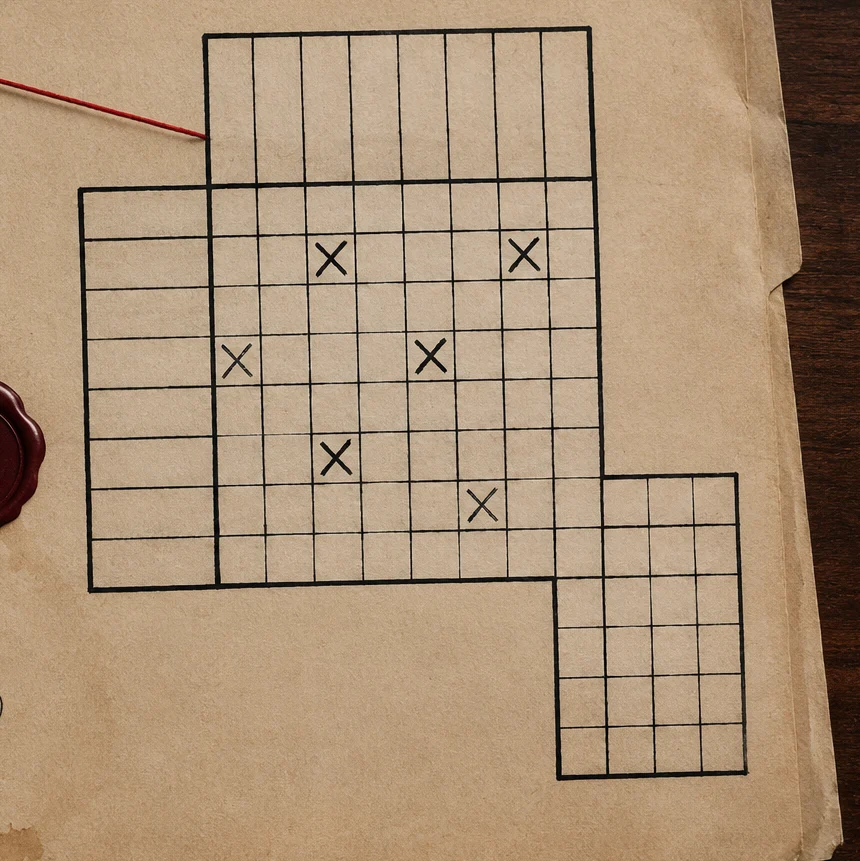
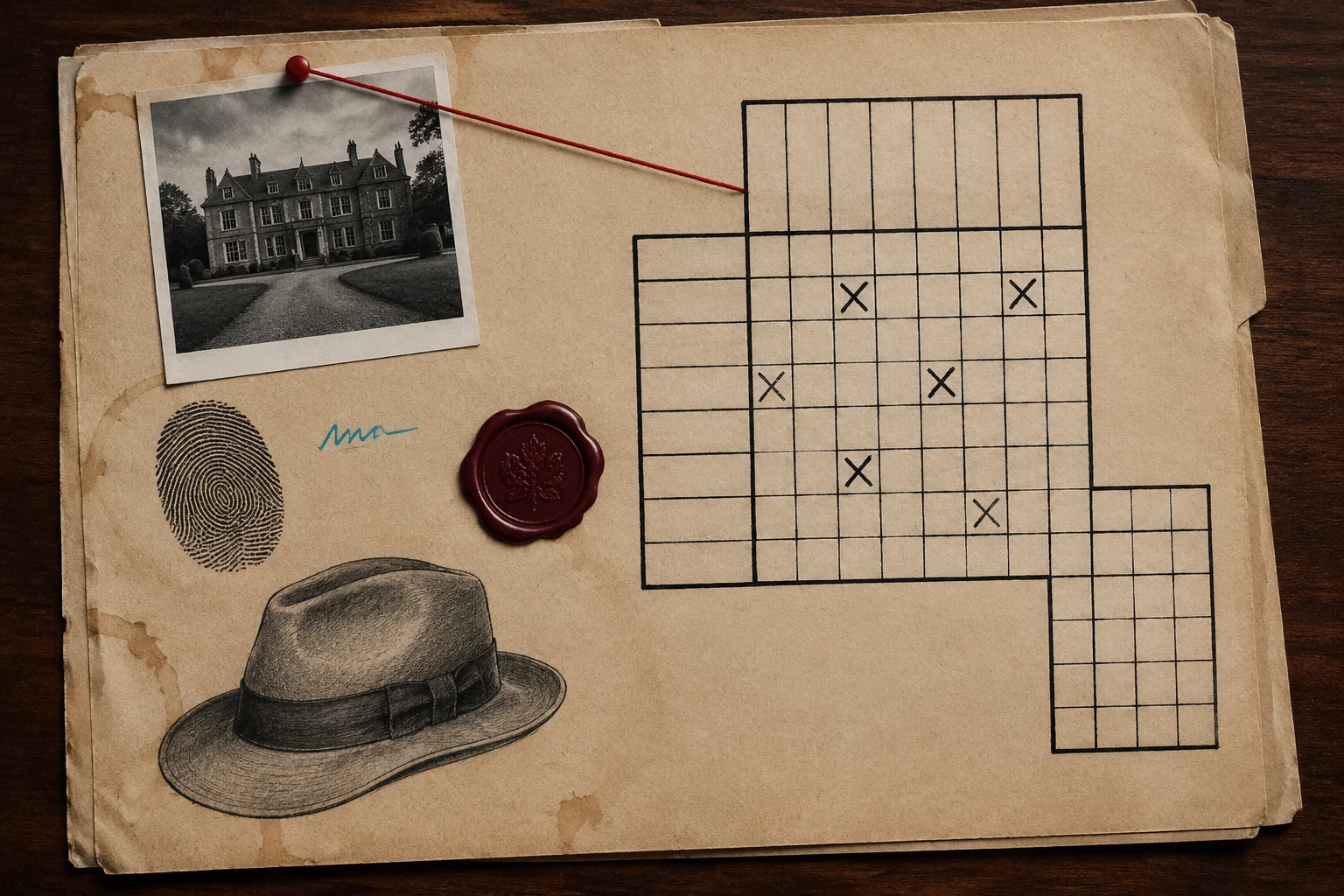
The marks
- A check means this pair is true: this person used this weapon, or was in this place.
- A cross means the pair is impossible.
- When a row has one empty cell and the rest are crosses, that empty cell is a check.
- A check in one column crosses the rest of that column.
An original three-by-three
This case is mine, not a page from the books. Three neighbors: Ade, Bo, and Chi. Three rooms: kitchen, library, greenhouse. Three objects: kettle, letter, glove. Statements: Ade was not in the kitchen. The kettle was in the library. Bo did not have the letter. Chi was in the greenhouse. The glove was not with Chi.
Chi is in the greenhouse, so Ade and Bo are not. Ade is not in the kitchen, so Ade is in the library and Bo is in the kitchen. The kettle is in the library, so Ade has the kettle. Chi does not have the glove, and Bo does not have the letter, so Bo has the glove and Chi has the letter. That is the whole method: direct facts first, then the last empty cell.
On the real site
First match each suspect with their weapon and location using the grid. Then use the red crime clue to identify which matched suspect is the murderer; completing the associations alone does not identify the culprit. Submit the suspect, weapon and location, and a motive when the case asks for one. Some days add witness statements: test one suspected liar at a time, reverse that statement, keep the others true, and reject any assumption that causes a contradiction.
Source: Official tutorial. Grid, red clue, then accusation; checked 2026-10-01.
Source: murdle.com. The live accusation controls. Accessed 2026-10-01.
Source: Miss Murdle: how to play. A video walkthrough of the same controls.
Watch a walkthrough
Miss Murdle walks through the deduction grid, the statements, and the accusation. The video stays unloaded until you press play.
Questions and answers
What if two cells still look possible?
Recheck all direct exclusions and carry matches across the other pairwise grids. An unresolved pair may need another deduction; do not guess simply to fill a cell.
Does every clue stay true?
On elementary cases, yes. Later difficulties tell you that one speaker is lying, or that a line is a cryptogram. Those pages are separate.